Incense Culture
香文化
- 分类: 文化遗产
- ID: 1980464523764977664
Home CategoryCultural HeritageIncense CulturePlay3.5 minsIncense has been integral to Chinese culture for millennia, originating in ancient times for medicinal purposes. Initially used for healing and disease prevention, its use dates back to the Warring States Period (475-221 BC), evolving later for relaxation and religious rituals.ShareCatalogue1. Historical Origins2. Cultural Significance and Rituals3. Evolution and Modern Relevance4. Craftsmanship and Techniques
Historical Origins
Incense has held a significant place in Chinese culture for thousands of years, with its roots tracing back to ancient times. Originally, herbs and natural perfumes were used for medical purposes, long before they became associated with relaxation or religious rituals. The earliest recorded use of incense dates to the Warring States Period (475-221 BC), during which fragrance was primarily utilized for healing and disease prevention.
The introduction of foreign spices into China during the Tang Dynasty (618-907) marked a pivotal moment in the evolution of incense culture. Exotic spices like musk and ambergris were transported via the Silk Road, deeply influencing Chinese aesthetics and cultural practices. By the Song Dynasty (960-1279), incense-burning was interwoven with the lives of the literati, symbolizing a refined pursuit embraced by scholars and emperors alike.
Cultural Significance and Rituals
Incense was not only a tool for spiritual practice but also became an emblem of cultural sophistication. During the Song Dynasty, incense appreciation gatherings were held, where intellectuals engaged in poetic and philosophical discussions, appreciating diverse scents that symbolized introspection and mindfulness.
The craft of incense-making involved intricate designs and techniques, evolving over time to reflect a deeper connection with nature and spirituality. The tradition of hexiang, or harmonious blending of herbal aromas, was developed to emphasize balance and curative qualities, closely tied to traditional Chinese medicine (TCM).
Evolution and Modern Relevance
With the passage of time, the use of incense adapted to societal changes. During the Qing Dynasty (1644-1911), it faced preservation challenges amid social upheaval. However, today, incense culture is experiencing a renaissance, driven by a growing interest in traditional wellness practices.
Modern incense makers like Weng Jianzhi are reviving ancient techniques to create blends that cater to contemporary lifestyles. Weng's approach centers on the traditional art of hexiang, crafting incense with therapeutic properties and integrating Chinese medicinal principles. This method emphasizes harmony, where each herbal ingredient contributes to a balanced and holistic aroma.
Craftsmanship and Techniques
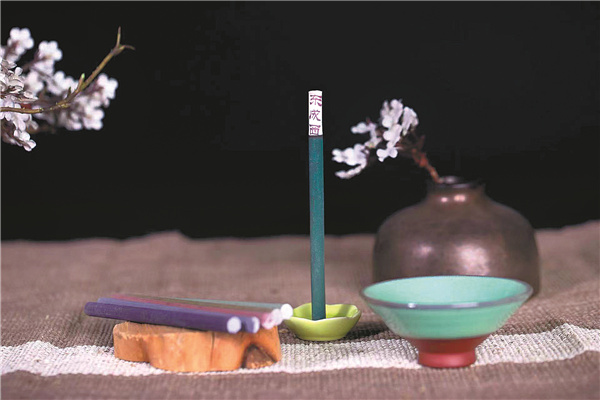
Creating incense is a meticulous process, requiring expertise in selecting the right proportion of spices and plant adhesives. Traditional methods involve precise grinding, mixing, and shaping of ingredients into various forms such as coils, sticks, or cones. The final product must undergo drying and cellar storage to maintain quality and enhance fragrance.
Incense craftsmen like Yang Jinqing in Baoding, Hebei, have inherited ancestral knowledge, refining ancient recipes and innovating with smokeless incense and auspicious designs. Their efforts preserve the integrity of the craft while introducing modern variations to appeal to younger generations. Article reference1. Young artisans revive curative benefits of Chinese incense. chinadaily.com.cn. 20242. The smell of success. chinadaily.com.cn. 20233. Artisan teaches Chinese incense culture in Nantong. en.nantong.gov.cn. 20204. Scents & sensibility. chinadaily.com.cn. 2018Photo Gallery(32 pictures)CategoriesCultural HeritageTagIntangible Cultural HeritageTraditional CustomCatalogue1. Historical Origins2. Cultural Significance and Rituals3. Evolution and Modern Relevance4. Craftsmanship and Techniques- - - []








